As summer temperatures rise, it is vital to understand how to care for elderly and vulnerable people during hot weather. High temperatures can quickly worsen existing health conditions and lead to serious heat related illnesses, some of which can be life threatening.
Why hot weather is a serious risk for older people
During a heatwave, when temperatures stay unusually high for more than a couple of days, the risk to health increases significantly. Older people are particularly vulnerable because ageing reduces the body’s ability to regulate temperature. Factors such as particular health conditions, reduced mobility, or living alone can make coping with extreme heat even harder.
When the air temperature is higher than skin temperature, sweating becomes the only effective way to cool down. Anything that reduces sweating, such as dehydration, certain medicines, tight clothing, or a lack of airflow, can lead to dangerous overheating. Heat can also put extra strain on the heart, worsen breathing problems, and in some cases trigger infections.
Who is most at risk during a heatwave?
People at greatest risk include:
- Older adults, especially those over seventy five, or those living alone or socially isolated.
- People with chronic or severe health conditions such as heart disease, diabetes, respiratory problems, kidney issues, Parkinson’s disease, or mental illness.
- Those on medications that affect sweating, thermoregulation, kidney function, or fluid balance.
- People who cannot adapt their behaviour to stay cool, such as those with Alzheimer’s, dementia, or physical disabilities.
Caregivers should review medical histories, current medications, and living conditions, and increase check ins during hot weather to spot any issues early.
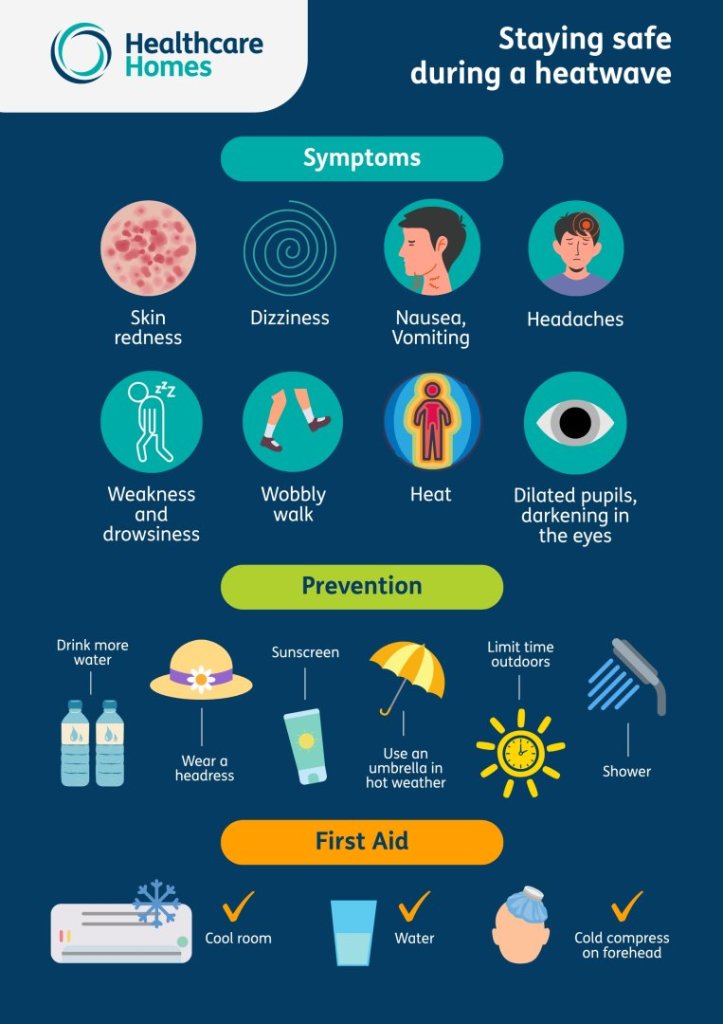
Effective strategies for staying cool
Combining simple home adjustments with daily habits can make a big difference. Key actions include:
- Keep indoor spaces cool – close curtains or blinds during peak sunlight hours, and open windows in the cooler evening air. Use fans to circulate air and consider portable coolers or air conditioning where possible.
- Encourage regular hydration – offer drinks frequently, ideally water or diluted juice. Include water rich foods like cucumber, watermelon, and tomatoes. Remember, some people may not feel thirsty even when dehydrated.
- Support balanced nutrition – maintain regular, nutritious meals to help the body cope with heat stress.
- Dress appropriately – choose loose, light coloured clothing made from breathable fabrics like cotton.
- Plan outdoor time carefully – avoid the midday sun, between eleven in the morning and three in the afternoon. If going out, wear a hat, apply sunscreen, and seek shaded areas.
- Use cooling techniques – cool showers or baths, damp flannels on the neck, wrists or forehead, or placing a frozen water bottle near a fan can all help reduce body temperature.
- Stay connected – check in regularly with those living alone, and arrange for neighbours or friends to call if you cannot visit in person.
Recognising and responding to heat-related illnesses
With rising temperatures, it’s vital to monitor elderly and vulnerable individuals for heat-related illness. Heat exhaustion symptoms include heavy sweating, weakness, dizziness, nausea, and headaches. Heatstroke is a medical emergency which presents with high body temperature, confusion, rapid pulse, and possible loss of consciousness.
If heat exhaustion is suspected, move the person to a cool or shaded place, elevate their legs, offer water or a sports drink, and use damp cloths and fans on their forehead to reduce body temperature. For heatstroke, call emergency services immediately while cooling the person.
Seek urgent medical help if symptoms worsen or if there is confusion, inability to drink, or lack of sweating despite heat. Quick action during extreme weather can greatly reduce the risk of serious illness.
Helpful tips to support older people during hot weather
Heat related illnesses can develop quickly and range in severity. Heat cramps are muscle spasms caused by a loss of fluid and electrolytes, while heat rash appears as small, red, itchy bumps on the skin. Heat oedema is swelling, usually in the ankles, caused by fluid retention, and heat syncope refers to dizziness or fainting due to low blood pressure from heat and dehydration. Heat exhaustion is more serious, with signs such as heavy sweating, weakness, dizziness, nausea, headache, and a body temperature between thirty seven and forty degrees Celsius. The most severe condition is heatstroke, a medical emergency in which the body’s cooling system fails, leading to a high body temperature above forty degrees celsius, confusion, rapid pulse, flushed dry skin, collapse, seizures, or unconsciousness.
What to do:
- For heat exhaustion – move the person to a cool place, elevate their legs, offer water or an electrolyte drink, and cool the skin with damp cloths or fans.
- For heatstroke – call emergency services immediately. While waiting, move the person to a cooler place, remove excess clothing, and use cool water on the skin to bring the temperature down.
Seek urgent medical help if symptoms worsen, the person becomes confused, is unable to drink, or stops sweating despite the heat.
Hot weather affects the body faster than many people realise. Simple measures, such as keeping living spaces cool, encouraging hydration, and checking in regularly, can significantly reduce the risks. By staying alert to the signs of heat distress and taking swift action, you can help keep elderly and vulnerable people safe and well throughout the summer heatwave.
Deciding when is the right time for someone to move into a care home is never simple. Every person and every family is different, and the...

Back to Christmas Companions For many of us, December is full of familiar traditions, family gatherings and festive fun. But for some older adults,...

Winter can be a magical time of year, but as the temperature drops, it’s essential to remember that winter can also bring challenges, especially for...

What is respite care? Respite care is a short-term support service aimed at providing relief for individuals who care for family members or friends...